
label

- natural landscape
- Geographical landscape
- ancient town
- Holiday Resort
- perform
Price Description
Traffic situation
Scenic spot description
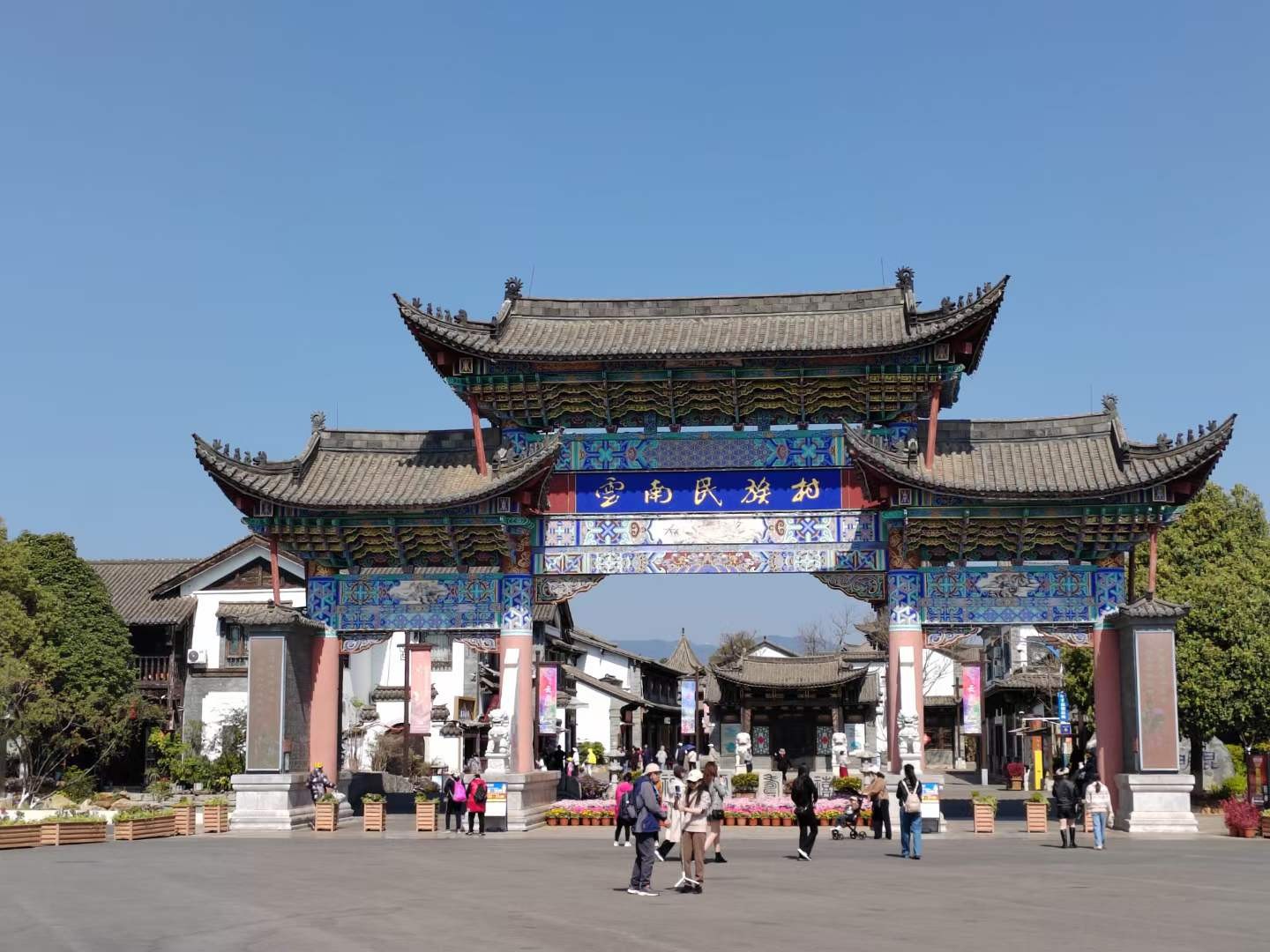
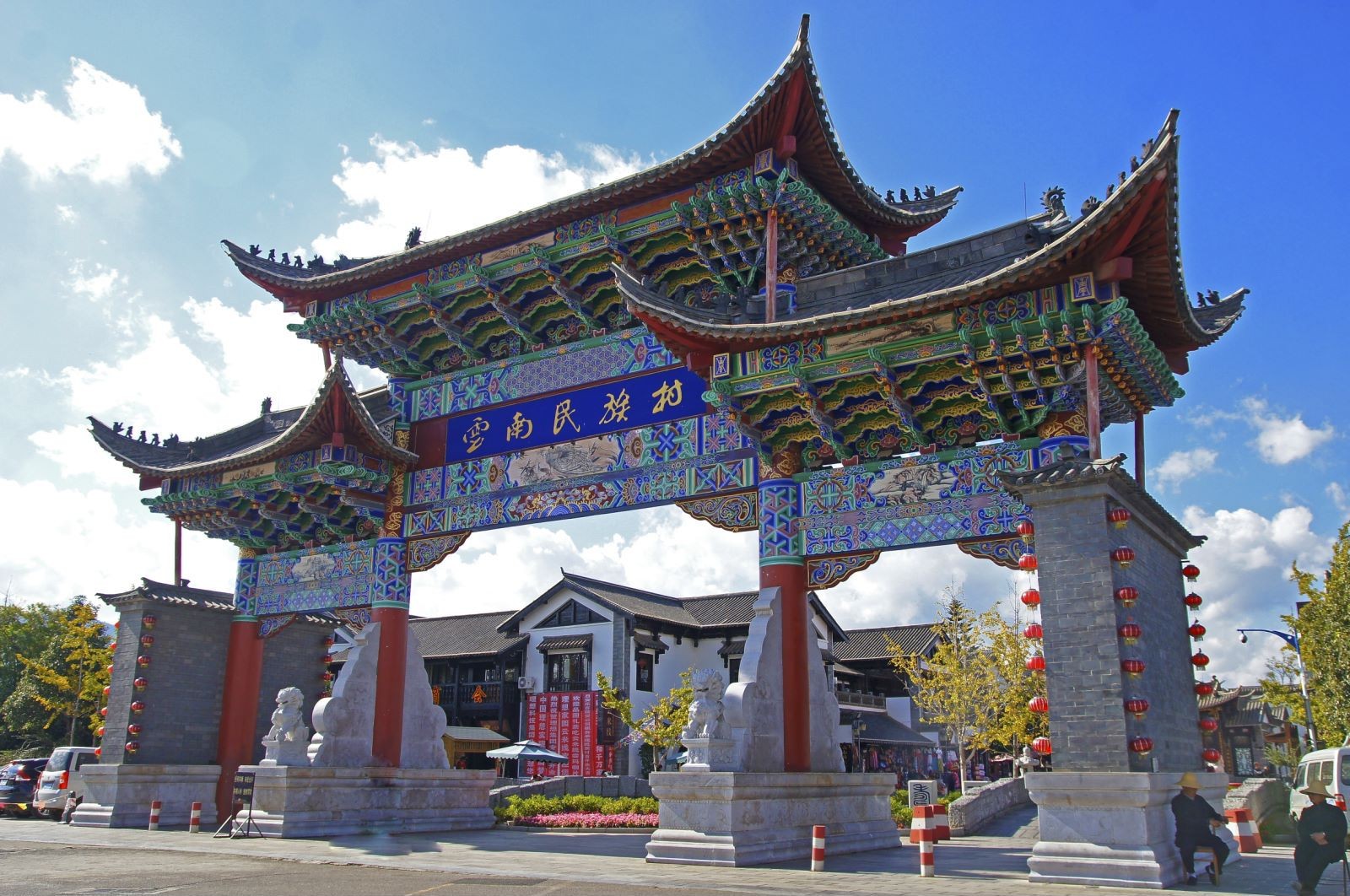
Yunnan Ethnic Village is located on the banks of Dianchi Lake in the southwest suburbs of Kunming City, Yunnan Province. It is mainly composed of natural village style residential buildings, integrating garden landscapes, beautiful waters, and green trees. There are 25 ethnic minority villages in the park, including Dai, Bai, Yi, Jingpo, etc., each with different folk customs and craft performances. Among them, Dai villages and Yi villages are the most worth visiting, with unique Yi ethnic buildings such as earthen palm houses, baking workshops, and cultural buildings. During ethnic festivals such as the Water Splashing Festival and Torch Festival, lively celebration activities will be held in the scenic area. It is recommended to visit during this period
Yunnan Ethnic Village Scenic Area has various shapes of ethnic minority residential buildings, colorful clothing, interesting wedding customs and etiquette, colorful ethnic festivals, beautiful and humorous music and dance, as well as various comprehensive supporting facilities such as exhibitions, amusement, vacations, and catering services
Yi Village is worth a visit to the Sun Calendar Square, where there is a stone pillar standing in the middle. In ancient times, Yi people used the shadow of the stone pillar to observe the time. The giant "tiger" in the village is the totem of the ancient Yi people
Preferential policies:
Free:
Elderly people: people over 70 years old (inclusive) with ID card/Seniors Card/Retirement Certificate; people over 80 years old (inclusive) with ID card and other valid certificates can enter the scenic spot free of charge with one attendant.
Children: children under 6 years old (inclusive) or under 1.2 meters tall (inclusive) with ID card
Active servicemen, disabled servicemen, retired cadres and retired non commissioned officers: with officer card and ID card
model worker: National, provincial and municipal model worker
reporter with model worker card and ID card: go through relevant procedures at the scenic spot market department with the press card and interview letter issued by the State Administration of Radio and Television, Free admission is only allowed
Travel agency manager: present the travel agency manager qualification certificate and ID card
Fire rescue personnel: in-service, retired, disabled fire rescue personnel and students of fire rescue colleges holding valid documents
Discounts:
Minors: 7 years old (inclusive) -18 years old (inclusive)
Full time primary, secondary, and tertiary students: with student ID
Half price:
Elderly: 60 years old (inclusive) -70 years old (exclusive) with senior ID or ID
Opening hours:
December 1st to December 31st
Monday to Sunday Daycourt: 09:00-18:00, 17:00 Closed, Night court: 17:30-21:20:00 Stop entry
Main villages:
Bai Ethnic Village
Covering an area of 62.5 acres. The village is dominated by Bai traditional folk houses with cornices and arch of wooden architecture and carved beams and painted rafters. The layout of "three squares and one screen wall", "four in five courtyards", "dyeing workshop", "wooden carving house", "garden tea house", "stage", "main temple" and Dali "Chongsheng * three towers" make the entire village courtyard arranged in rows, spacious and tidy. A "Dali Street" that sells exquisite industrial products runs north and south, with folk museums and butterfly exhibition halls along the street. The Bai ethnic group is warm and hospitable, and it is their etiquette to treat guests first and then the host. Guests arrived at home and treated each other with wine and tea. The famous three teas are the hospitality of the Bai ethnic group. But the Bai people usually pour only half a cup of tea, and a full cup of wine. They believe that when the wine is full, it is respectful to others, but when the tea is full, it is deceitful. When receiving warm hospitality from the Bai people, you should say "Nuowei you (thank you)" to express your gratitude and appreciation. Respecting elders is a traditional virtue of the Bai ethnic group. When seeing an elderly person, one should take the initiative to greet, greet, give way, offer a seat, serve tea, and pass cigarettes. The fire pit at home is a sacred place, and it is forbidden to spit into it or cross over it
The main programs include folk arts such as "Overlord Whip", "Straw Hat Dance", "Big Ben Song", etc., which are full of festive and joyful atmosphere; Folk festival activities such as "March Street", "Around the Three Spirits", "Welcoming the Bride", etc
Yi Village
covers an area of more than 50 acres, and the Three Tiger Relief Wall and Tiger Mountain design express the characteristics of Yi tiger culture. The totem pole in the center of the Sun Calendar Square features images of the sun, tiger, fire, and eight trigrams, surrounded by 10 different moon shapes in black and white. There are 12 zodiac stone carvings distributed around the circumference of the square. The "Tuzhangfang" architectural complex built along the mountain truly reproduces the Yi people's concept of harmonious coexistence with nature. There are tusi courtyard, cultural building, educated youth room, distillery, and weaving and embroidery room in the building. There are bullfighting arenas and tea mountain gardens built in the village, as well as folk sports facilities such as swings. The main festivals of the Yi ethnic group include Torch Festival, Yi New Year, Worshiping the Main Worship, Mizhi Festival, and Song Jumping Festival. The Torch Festival is the most common and grand traditional festival in Yi ethnic areas, usually held on the evening of the 24th to 26th day of the sixth lunar month. During the Torch Festival, people of all ages and genders of the Yi ethnic group dress up in festive attire, play animal sacrifices and offer spirit plaques, and dance, sing, race horses, and wrestling to their heart's content. At night, holding a torch, circling around the residence and fields, then gathering together to light a bonfire and dance gracefully
Miao Village
selects mountainous areas as the environment, which is representative and extracts the essence of Miao architecture. The hanging corner tower displays Miao costumes and handmade crafts, while the residential building reflects the folk style of daily life. The Miao ethnic group is a singing and dancing nation, and both mountain songs and lusheng dance are very popular among the masses. Lusheng dance, also known as "dancing song", "beating dance", "stepping on Lusheng", is a folk dance that combines self entertainment and performance among the Miao people. During festive occasions, Miao people dress up in costumes and gather on the lusheng field, playing the moving lusheng while dancing, indulging in wild revelry. The lusheng dance is cheerful and lively, with graceful movements. The young men are rough and passionate, bold and steady, while the girls have graceful postures and subtle emotions
Miao traditional festivals are divided into agricultural activity festivals, material exchange festivals, men's and women's social events, love and mate selection festivals, * * sexual festivals, and commemorative celebration festivals. There are more than one festival day every month. The annual "Huashan Festival" is a traditional festival of the Miao ethnic group, as well as a festival for young men and women to seek kindred spirits and for middle-aged and elderly people to wish each other well. The "Drum Festival" is the largest folk activity of the Miao ethnic group, during which a Guzi cow is killed, ancestors are worshipped, and family and friends are invited to gather together
covers an area of 27 acres, surrounded by water on three sides and nestled by green trees. A series of "ganlan style" Dai bamboo buildings, connected to the solemn Burmese through winding red sandstone paths. The majestic and spectacular White Pagoda, exquisite Wind and Rain Bridge, as well as Wind and Rain Pavilion, Water Well, Bell Pavilion and other buildings are full of the rich customs of the Dai ethnic group, and are a true representation of the folk landscape of the Dai village
Zhuang Village
During the annual "Water Splashing Festival", there are lively and cheerful "elephant foot dance" ("ga guang dance") and graceful "peacock dance". Festivals: The major festivals of the Dai ethnic group include Water Splashing Festival, Door Closing Festival, and Door Opening Festival. The Water Splashing Festival is the most distinctive festival of the Dai ethnic group, which takes place in the sixth month of the Dai calendar (mid April in the Gregorian calendar) and lasts for three days. The first two days are dedicated to bidding farewell to the old and the last day is dedicated to welcoming the new. On this day, people worship *, and girls wash the dust with water floating with flowers, then splash water and play with each other, wishing each other well. They believe that this can prevent diseases, maintain peace throughout the year, and the sound of drums, gongs, splashing water, and cheers resound. During this period, traditional entertainment activities such as dragon boat racing, high-altitude flying, lantern flying, and various song and dance parties will also be held
Tibetan Village
covers an area of 21 acres, and there are various types of houses with sloping roofs and carved flat roofs in the village. The solemn and sacred Tibetan architecture, the magnificent welcoming white pagoda, the auspicious and harmonious "White Yak" sculpture, and the unique style of Tibetan architecture complement each other and complement each other. During the festival, folk songs are sung, Guozhuang dance and Xianzi dance are performed, and riders also participate in horse racing and archery competitions
Festival: The New Year's Day in the Tibetan calendar is the most important festival for the Tibetan people. They dress up in formal attire to pay respects to each other and pray for blessings in the courtyard. On the fifteenth day of the first lunar month, various major courts held ceremonies, such as the prayer ceremony; On the eighth day of the fourth lunar month, there will be a mountain turning ceremony (Mu * Festival, Respect for Mountain God); May Dragon Boat Festival Horse Racing Competition; July 'Wangguo' Festival; Dancing with gods on the 29th of the winter moon and so on
Yaozhai
is composed of residential hanging corner towers, bungalows, rural road views, grain warehouses, village gates and other buildings, arranged in a staggered manner; The infiltration of some Taoist cultural elements is quite typical
Yao music and dance, like their folk songs, originated from labor and religion. His famous dances include Long Drum Dance and Bronze Drum Dance, which are large-scale dances of King Pan and Milo Tuo. There are dozens of popular folk dances, including lion dance, grass dragon dance, flower stick dance, incense dance, and apprenticeship dance
Festivals: Major festivals include King Pan Festival, Spring Festival, Danu Festival, Zhongyuan Festival, Shewang Festival, Qingming Festival, etc. Small festivals are almost every month. Panwang Festival, commonly known as "Jumping Panwang" or "Returning Panwang's Wish". It is held every three to five years, on the 16th day of the tenth lunar month, usually by one household, several households, or one village. The main ceremony is performed by the master jumping to pray, singing the King of Pans song, jumping to encourage the long, and praying to the King of Pans (Panhu) for blessings and blessings. Panwang Festival is usually a grand festival for the Yao ethnic group who call themselves "Mianzhi"
Achangzhai
is mainly composed of a combined school building, which echoes with the village gate, handicraft workshop and other buildings. It is characterized by blue tile brick walls, stone foundations and columns. The Achang people are warm and hospitable, respecting the elderly and loving the young. When guests come to take a nap at home, the host should treat them to good wine and tea, and show courtesy when eating. If the guests are young and young, they can decline to sit on the side or below; When it comes to toasting or pouring tea, it is important not to be impolite and accept it. There is a custom of persuading guests to eat, regardless of whether they know how to drink alcohol or tea, and it is taboo for guests not to accept it; When faced with persuasion to eat, regardless of whether one is full or not, one should stretch out their wings and hold the bowl together; Receiving or standing up with both hands is considered respectful. The main religious festivals include "entering the valley", "leaving the valley", "white wood", and "water festival". Except for religious festivals, the Achang ethnic group in Hulasa has several major festivals of the year, such as Chongpai, Dengwoluo, Huijie Festival, Changxin Festival, and Splashing Water Festival, which are the same as those of the Dai ethnic group
Mosuo Home
Located adjacent to the "Lugu Lake", there is a "wooden ridge house" inhabited by Mosuo people. This quaint Sihe Zhai building, built entirely of natural wood, is named "Mosuo Home". The Mosuo people live by the Lugu Lake in the Yongning area of the northwest Yunnan Plateau, with a population of about 80000. They still maintain the living habits of matrilineal clans and matrilineal families to this day. This peculiar folk custom has attracted the attention of anthropologists around the world, adding a strange and mysterious color to the Mosuo people from time to time
Tourist Route:
Dai Village - Shui, Buyi Village - Wa, Bulang Village - Miao Village - Jino, Lahu Village - Yao Village - Bai Village - Zhuang Village - Naxi Village - Mosuo Home - Yi Village - Jixiang Garden - Hani Village - De'ang Village - Tibetan Village - Jingpo Village - Achang Village
Flower Viewing Information:
Plum Blossom: flowering period from December to February of the following year, Flower Viewing Location: Miao Village
Cherry Blossom: flowering period from December to March of the following year Location for Flower Appreciation: Beside Unity Square
Winter Yin Flower: Flowering from November to mid November of the following year, Location for Flower Appreciation: Between Yi Village and Bai Village
Haitang Flower: Flowering from March to May, Location for Flower Appreciation: Between Yi Village and Bai Village
Lotus: Flowering from July to September, Location for Flower Appreciation: Right of Elephant Performance Hall
Recommend Trip
Guess you like it
Recommended tourist attractions
Guess you like it