label

- natural landscape
- Geographical landscape
- building
- Ethnic customs and traditions
Price Description
Traffic situation
Scenic spot description
Kunming Jindian Scenic Area, a national AAAA level scenic spot, is located on Mingfeng Mountain in the northeast suburbs of Kunming. It is a comprehensive scenic spot that integrates famous historical sites, national key protected cultural relics "Taihe Palace Jindian", and Kunming Garden Botanical Garden. Named as a popular science education base in Yunnan Province and an excellent civilized tourist attraction in Yunnan Province@On February 23, 1982, the "Golden Hall of Taihe Palace" was announced by the State Council of the People's Republic of China as the second batch of national key cultural relics protection units. In 2001, Kunming Jindian Scenic Area was included in the first batch of national AAAA level scenic spots
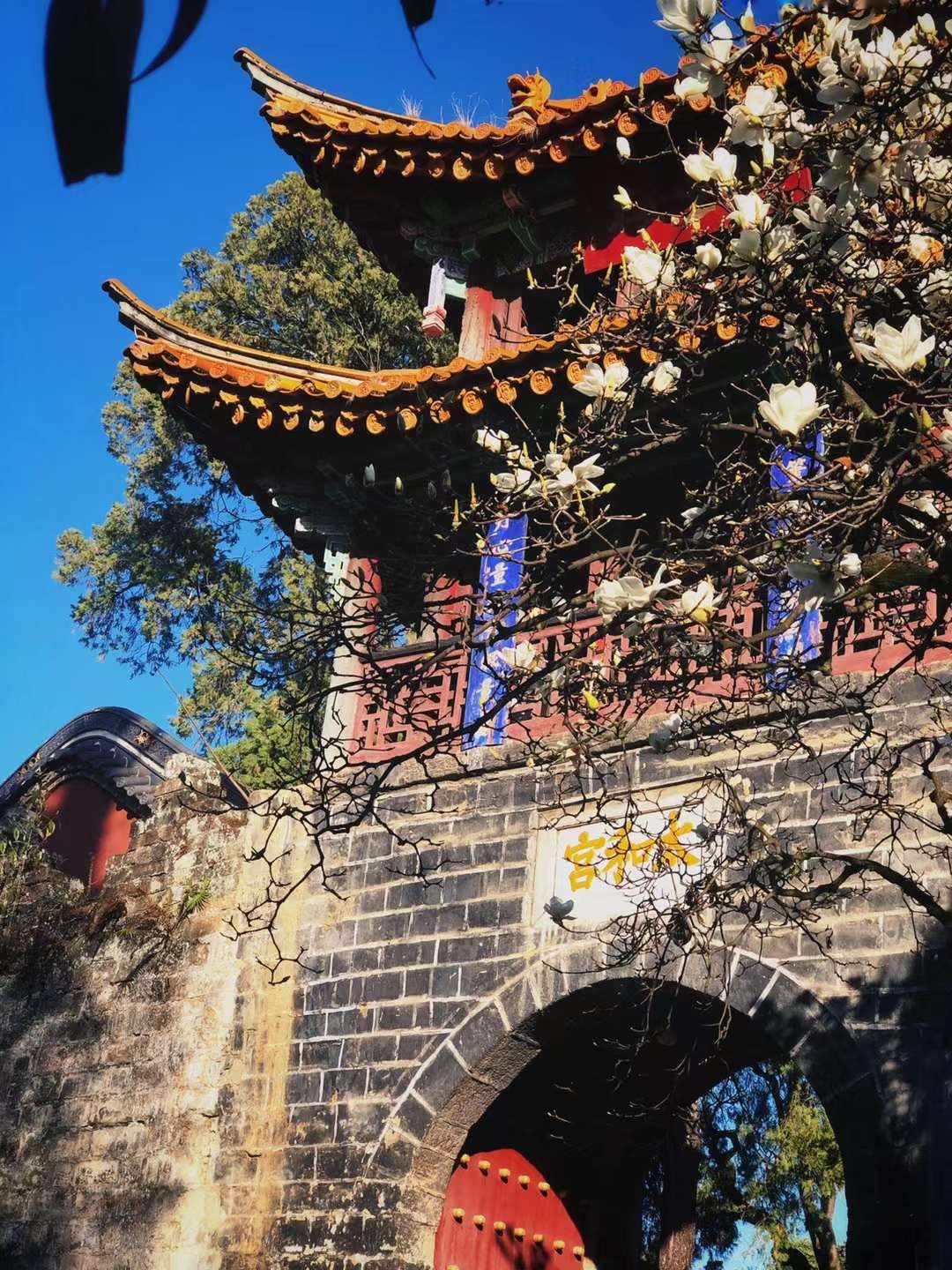
The Forbidden City was built in the Ming Dynasty to protect the bronze palace. The city is over zhang high and has a circumference of 365 feet. It is taken as the number of days in a year, symbolizing daily peace. Open one door each in the southeast, northwest, and north directions, with the door painted in red and pink, and gold nails piercing through the door. There is a two-story high city building on the top of the west gate, dedicated to Kuixing, commonly known as the "Kuixing Building"
Taihe Palace Golden Hall, also known as Copper Tile *, located on Mingfeng Mountain in the northeast suburbs of Kunming City, commonly known as Parrot Mountain. Mingfeng Mountain, originally named Xiangdu Mountain, was renamed Mingfeng Mountain after the establishment of the Golden Hall of Taihe Palace during the Ming Dynasty's Wanli period. It has been a Taoist scenic spot in Yunnan since the Ming Dynasty
Main attractions:
Tianmen
Mingfeng Mountain erected a four pier three door stone memorial archway, the front of which is "Whispering Wind Wonderland", and the back of which is "Yuxu Kongqu". To the east of Shifang, there is a stone tablet erected by Chen Yongbin of the Ming Dynasty, which reads' Tang Gaofeng Zhengjie Lv Zhenren Cave Road '
Pass through Shengjing Square, climb along the stone steps to the gate of Taihe Palace, and build three "Tianmen" memorial archway on the more than 240 meters pine shaded stone winding path. The "Tianmen" are all four piers and three gates. The One day Gate maintains the architectural style of the Ming Dynasty, with no arch of wooden architecture for columns and beams; The two and three day gates are decorated with arch of wooden architecture, carved beams and painted rafters, and towering. In 1998, the Jin Dian West Gate was newly opened, located at the western foot of Mingfeng Mountain. The stone steps and winding paths connect the two Heavenly Gates. The west gate is a glazed memorial archway with triple eaves, four piers and three gates
Huancui Palace
Mingfeng Mountain, with Taihe Palace in the center and Huancui Guan on the cliff to the north, which is the Lv Xian Temple built during the Ming Wanli period
Huancui Palace is a group of quadrangle courtyard buildings, with the main hall facing south and north. The east and west wing rooms are two-story residential style wooden structures, and the north gate tower has a roof of the Song Mountain Ridge. The two-story wooden structure building is connected to the corridor of the wing rooms. The front hall is the "Cihang Hall", and the upper floor is an exhibition of Chinese Taoist history; The main hall enshrines Taoist statues such as Sanqing, Yuhuang, and Lv Zhenren
Taihe Palace Scenic Area
- Taihe Palace
- Golden Hall, also known as Tongwa * and Taihe Palace, is located on the top of Mingfeng Mountain, facing east to west. It is a famous Taoist temple in Yunnan in history
- Taihe Palace Mountain Gate is a five room hall with glazed tile roof and gable entrance hall, red walls and yellow tiles. It was rebuilt on the original site in 1978. The "Taihe Palace" plaque is a relic from the Jiawu year of the Guangxu reign of the Qing Dynasty (1894). On the eight character wall outside the door, there are four large characters "Parrot Spring Deep" written by Ming Dynasty calligraphers, with rounded and full strokes, which are precious calligraphy treasures. The entrance to the mountain is the Lingxing Gate, a memorial archway with four piers and three gates on the eaves of arch of wooden architecture. Hanging at the Lingxing Gate - a Li script couplet: The rooftop is a hundred feet high, with bamboo dancing in the eastern forest, half green mountains and half clouds; The emperor's path reaches three thousand, the dragon flies up the valley, and the unparalleled jade universe and unparalleled land
- Entering the Lingxing Gate, there is a spacious garden with symmetrical exhibition rooms to the north and south, known as the original Lei Temple. After reconstruction in 1978, it was converted into the "Golden Hall Expo" and "Kunming Range Rover" exhibition halls.
- From the rain passage to the east, on the stone steps, is the Forbidden City built during the Wanli period of the Ming Dynasty. The city sits from east to west, with the west gate as the main entrance. On both sides of the west gate of the city, there are symmetrical bell and drum towers with four sided double eaved Liurui roofs. In front of the drum tower, there is a stone flower bed with a Ming Dynasty camellia - Lion Head. In front of the bell tower, there is a white magnolia flower bed, and on both sides, there is an ancient juniper tree. On the west gate of the Forbidden City, there is a Star Tower, with wooden carvings of Kuixing on the upper floor.
- Forbidden City
- The circumference of the brick city in the Forbidden City is 365 feet. On the second floor platform in the middle of the city, there is a copper cast North Pole True Martial Hall. The hall is a double eaved singing mountain, 6.7 meters high, 7.8 meters wide, and 7.8 meters deep, with 16 columns as treasure lotus foundations. The bronze hall is decorated with arch of wooden architecture on all sides. The roof ridge is carved with cloud dragon patterns, with dragon kisses on both ends and dragon flame beads in the middle. The ridge is decorated with people, horses, fish, etc. The four walls of the hall are composed of 36 lattice doors. The main entrance is cast with reliefs of cloud dragons and auspicious dragons and phoenixes; The geometric pattern of the character "longevity" is cast on the left and right walls and the rear door. There is an octagonal cloud dragon relief coffered pit cast inside the hall. On the main beam of the hall, there is a line of regular script engraved with the words "Jiping West Prince Wu Sangui respectfully built on the sixth day of the tenth year of the Kangxi reign of the Qing Dynasty and the tenth month of the Xinhai era". The entire copper hall, including the statues, curtains, plaques, and couplets, was all cast with copper. According to historian Fang Guoyu's research, the cast copper hall used more than 250 tons of copper, making it the largest and heaviest copper hall building in China@Inside the hall, there is a bronze statue of the True Martial Ancestor in the middle, with bronze statues of the Golden Child, Jade Maiden, Turtle, and Snake standing on both sides
- Copper Hall is installed on a stone platform. The upper platform, railings, cloud dragon terraces, flooring, etc. are all embedded with marble; The foundation stones, railings, and cloud dragon hollow steps of the lower platform are made of a combination of ink and sand stones. The pedestal and railing are decorated with reliefs of birds, animals, flowers, birds, and twenty-four filial piety stories@On both sides of the lower platform of 51#
- , there are copper cast water and fire two generals, placed in a hexagonal double eaved small pavilion refined with sandalwood. On both sides of the Water Fire Two Generals, there is a pair of large stone lions carved from Qing Dynasty bluestone
- In front of the Copper Hall, there was originally a Qing Dynasty ink carved incense burner. The stone incense burner has been moved to the Cultural Relics Museum for protection, and one new copper incense burner has been cast
- Sun Moon Seven Star Copper Flag
- To the north of the copper palace platform stands the Sun Moon Seven Star Copper Flag, which was added during the Tongzhi period of the Qing Dynasty. The flagpole, flagpole, and flag of the Seven Star Flag are all made of steel. The flag star triangle has hollowed out sun and moon above, and the edge of the flag is in the shape of wolf teeth. It is surrounded by twenty-eight constellations and has the Big Dipper in the middle. The four characters "* * * *" are carved in the sky between the sun and moon, and on the ribbon of the copper flag, the words "Good weather, peace and prosperity for the country and the people" are engraved
- Laojun Hall and Sanfeng Hall
- Outside the east gate of the Purple Forbidden City, there is Laojun Hall surrounded by courtyards and corridors, and osmanthus flowers are planted inside the courtyard. The Laojun Hall sits east to west and was originally dedicated to the Grand Master Laojun. It was rebuilt in 1979 and is now designated as the Laozi Historical and Cultural Exhibition Hall
- Outside the south gate of the Forbidden City, there is the Sanfeng Hall, consisting of two main halls and a courtyard surrounded by north and south wing rooms. After reconstruction in 1979, it was converted into a service department for tea, snacks, cold drinks, and handicrafts. There is a stone tablet with the inscription of "Sanfeng Immortal Master" in the courtyard; Inside the upper hall, there are statues of Shangqing, Yuqing, and Taiqing, and a plaque reading "Sanqing Hall" is hung
- Tianshi Hall Cultural Relics Exhibition Hall
- The Tianshi Hall is located outside the north gate of the Forbidden City. During the Republic of China, the West Tower was built, forming a two-story courtyard house. In 1984, the northeast corner of the Forbidden City was repaired and the south wing of the Tian Shi Hall was demolished. The Tian Shi Hall was once used as the office of the scenic area management office. In 1993, it was opened as the Jin Dian Cultural Relics Exhibition Hall, with exhibition rooms for Wu Sangui's large sword and Zhenwu Seven Star Sword, Taihe Palace Cultural Relics Exhibition Hall, Chen Yuanyuan and Wu Sangui's art exhibitions, and Western Zhou bronze ware exhibition rooms
- "Seven Star Sword", weighing over 30 kilograms, with 7 copper stars embedded on both sides of the sword edge, originally hung in the Copper Hall. "The wise sword hangs high, often subduing demons and making monsters", it is the "treasure of Zhenwu", cast by Wu Sangui in the tenth year of the Kangxi reign of the Qing Dynasty (1671) when the Copper Hall was recast
- Wooden handled broadsword, weighing 12 pounds, is a broadsword used by Wu Sangui. It was left behind after the construction of the Copper Hall to show off his martial prowess
- The Taihe Palace still retains many important stone inscriptions since its establishment during the Ming Wanli period, such as the creation monument and merit monument in the Jiachen year of the Ming Wanli era (1604), and the "Inscription on the Reconstruction of Taihe Palace" in the 16th year of the Qing Guangxu era (1890). There are also couplets, ancient calligraphy and paintings, bronze ware, and magnetic ware that reflect the Taoist temples of the Ming and Qing dynasties
Bell Tower Scenic Area
- Bell Tower
- The Bell Tower is located at the highest point of Mingfeng Mountain, with an altitude of 2058 meters. Construction began in 1983 and was completed in October 1984. The Bell Tower is 29 meters high, with 3 floors and a "cross" shaped plan. Each floor has 12 guardrails and 36 guardrails. During construction, there is no road for vehicles, and all building materials are manually lifted up the mountain. When building the bell tower and opening up the bell tower scenic area, 273 tombs were relocated from the land@Under the dome of the third floor of Bell Tower 86#
- , there is a large copper bell hanging. The copper bell was originally hung in Yihua Building, the south gate of Kunming City. It was cast in the 21st year of the Yongle reign of the Ming Dynasty (1423), with a height of 3.5 meters, a caliber circumference of 6.7 meters, and a weight of 14 tons. It is the largest existing ancient copper bell in Kunming. The Yongle Bell was originally used to tell the time, and later used to sound the alarm. In 1953, the Xuanhua Building was demolished and the bronze bell was moved to the Ancient Building Park outside the Zhuangyuan Building. In 1970, it was relocated to the Jindian Scenic Area. In 1984, the copper bell was hung on the clock tower using three "grinders" to lift the suspension. Hang the copper bell, then install the roof rafters and glazed tiles
- Autumn Garden
- San Yuan Palace, located south of Taihe Palace, was built in 1918 as the tomb of Yu En Chang, a leader of the Yunnan National Protection Uprising, after being destroyed by war in the seventh year of the Xianfeng reign of the Qing Dynasty (1857). In 1966, Yu's tomb was destroyed during the Cultural Revolution. In 1984, it was converted into an autumn garden, with ponds dug to clear the water, flat bridges and arch bridges, and a large number of autumn plants planted. Autumn Garden still maintains the pattern of Yu En Chang San Tai Mu Garden
- To the east of Autumn Garden, a three story classical style restaurant with double eaves was rebuilt in 1998. Surrounded by corridors and pavilions, it is nestled among green trees and blends seamlessly with Autumn Garden
Kunming Garden and Botanical Garden
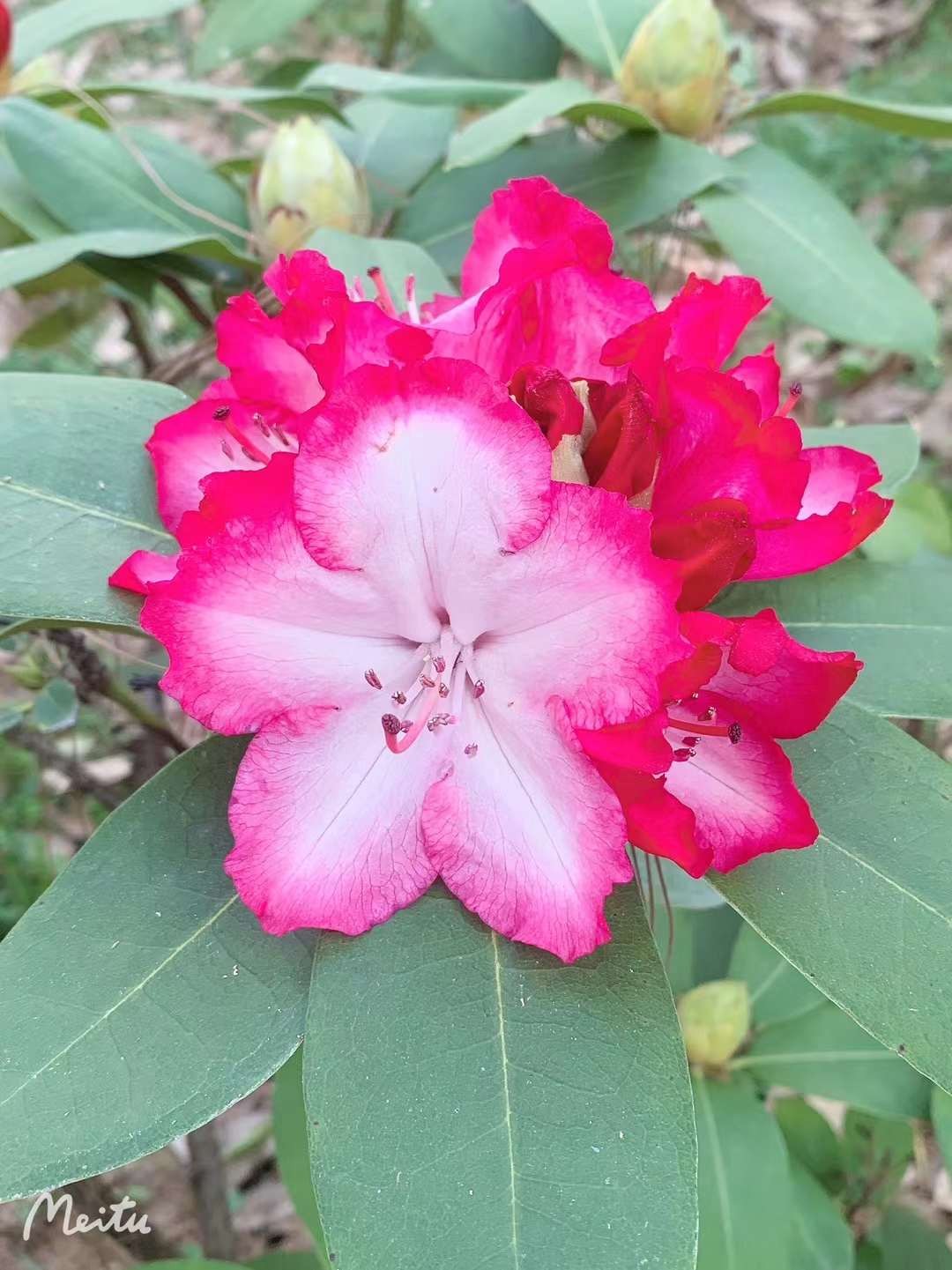
To the south of Mingfeng Mountain, there is a Kunming Garden and Botanical Garden covering an area of over 600 acres. It is divided into tea gardens, rhododendron gardens, flower greenhouses, magnolia gardens, rose gardens, rare and endangered plant areas, and pineapple gardens, with a total of more than 2500 types of garden plants planted
Tea Garden is the largest themed garden, covering an area of over 200000 square meters and planting more than 10000 camellias. The Dujuan Garden covers an area of 60 acres and is mainly planted with Yunnan Du Peng
Jindian Copper Culture
- Jindian Expo Garden
- West of Tianshi Temple, Beilei Temple Garden was newly built in 1995, reducing the ancient copper buildings in Wudang Mountain, Mount Wutai, Mount Taishan Mountain and Wanshou Mountain in Beijing by half, imitating wood carvings and actinides, bringing together a garden@The 114#
- scenic spot covers an area of 4000 square meters. It is a small and exquisite classical Chinese garden landscape with beautiful pavilions and pavilions
- Bronze Historical and Cultural Landscape Corridor
- During the environmental renovation from 1997 to 1999, the path to climb the Bell Tower was changed to a corridor from the Autumn Garden to the Bell Tower axis. On both sides of the corridor, there are replicas of bronze ware unearthed from Yunnan during the Warring States period to the Han Dynasty, including copper pillows, cow heads, shell storage vessels, gourd sheng, ox tiger bronze cases, and Dian Wang gold seals, making it a historical and cultural corridor of Yunnan bronze. In addition, there are also attractions such as the Bronze Age Bull Casting and the Western Zhou Bronze Ware Exhibition Room, which highlight the characteristics of bronze culture in the Golden Hall Scenic Area of Kunming
Flower viewing information:
Haitang: flowering period from mid March to late April
Rhododendron: flowering period from March to April
Rhododendron: flowering period from mid April to June
Bauhinia: flowering period from early April to early May
Embroidery thread chrysanthemum: flowering period from March to April
Camellia: flowering period from January to March
Cherry blossom: flowering period from March to March
Plum blossom: flowering period from early March to early April
Recommend Trip
Guess you like it
Recommended tourist attractions
Guess you like it